0808 144 4343
 Showrooms
 Contact Us
 Wish List




How To Look After Your Mattress Topper
Caring For Your Mattress Topper
Topper Maintenance
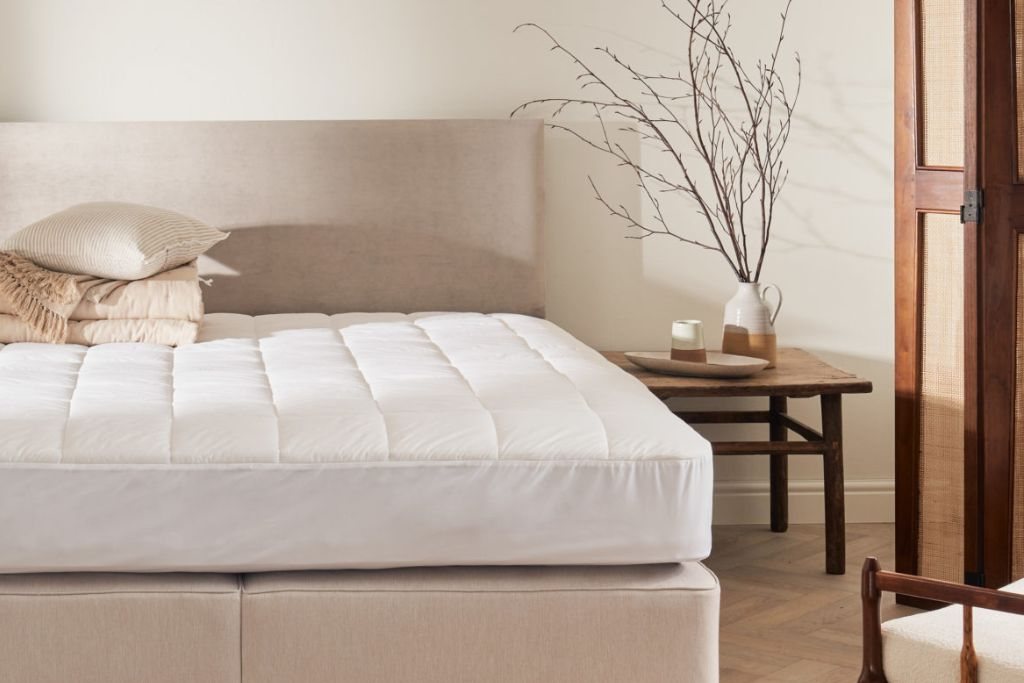
Regular maintenance is crucial for preserving your topper's performance and extending its lifespan. The simple practice of turning your topper each time you change your bed linens helps ensure even settling and prevents excessive compression in specific areas. This rotation, combined with occasional gentle shaking and light beating with your hand, helps redistribute the natural fillings and maintain optimal loft.
Natural Settling
It's essential to understand that all toppers, particularly those filled with natural materials, will naturally settle and compress in the areas where you sleep. This settling process is not a defect but rather a natural characteristic that enhances your sleep experience by creating a personalised sleeping area moulded to your body's contours. A dip of around 2.5cm is completely normal and expected, representing the topper's adaptation to your specific sleep patterns and body shape.
How To Clean Your Topper
Keeping your topper fresh prolongs its life and ensures consistently comfortable sleep. Natural fillings benefit from gentle but regular care.
Step 1 - Regular Vacuuming
Every three months, lightly vacuum the topper using your upholstery attachment. Focus on seams and tufted areas where dust and debris can settle. Always begin on the lowest suction setting to protect delicate fibres, increasing only if necessary. Avoid using rotary brushes, which may damage natural fabrics.
Step 2 – Cleaning Spills and Stains
Act quickly to prevent staining.
- Blot (never rub) any spill immediately with a clean, colourfast cloth or kitchen towel to absorb as much liquid as possible.
- For biological stains (such as sweat or body oils), apply a small amount of enzyme cleaner to a clean cloth and gently blot the area.
- For food or drink stains, a paste of baking soda and cold water can help lift marks without saturating the fibres.
- Always use minimal moisture, never soak the topper, and allow it to air dry completely before remaking the bed.
Step 3 - Refresh and Air
Periodically, remove all bedding and air your topper in a well-ventilated room. This helps to release trapped moisture and refresh natural fibres.
Step 4 - Rotation and Fluffing
Turn and rotate your topper every time you change your bed linens to encourage even wear. A gentle shake or patting with your hands helps redistribute fillings and maintain loft.
Step 5 - Protection
Use a breathable mattress protector to safeguard against spills, dust, and allergens without compromising airflow. Having a spare allows for regular washing and quick replacement.
By following these steps, you’ll preserve the integrity of your topper and enjoy the same luxurious comfort night after night.
Attaching A Topper To A Mattress
Vispring's Button Handle System
The signature Vispring attachment method features handmade fabric bands that loop around your mattress handles, providing secure positioning without restricting your ability to turn or rotate your mattress. This thoughtful design ensures your topper remains properly positioned while maintaining the flexibility essential for proper mattress care.
Alternative Attachment Methods
Elasticated corner straps, like those found on mattress protectors, work particularly well with lighter toppers, providing secure attachment without complex installation. For heavier toppers constructed with substantial natural materials, the weight itself often provides sufficient stability, eliminating the need for additional attachment systems once sheets and protectors are in place.
Getting Used To A Mattress Topper
“Sometimes, it can take a few weeks to get used to a new mattress or topper as it may slightly change the way that you sleep,” explains Dr. Lindsay. “For example, one study (Jacobson, Boolani & Smith, 2009) found that It can take up to 4 weeks to fully adjust to a new bedding surface, with some improvement noted within the first week.”
How Often Should You Replace A Topper
Dr Lindsay guides that ‘A topper cannot make up for a mattress that is worn out. It cannot disguise a mattress that is sagging or lumpy, in which case you may need to purchase a replacement. A mattress topper should be replaced once it loses shape or no longer provides support or comfort.”